

Wondering when to book that first orthodontic visit for your child? You’re not alone. Parents ask us this all the time. Knowing when your child should first see an orthodontist can shape their smile for life, and the right timing makes all the difference.
At Norton Orthodontics, Dr. Norton brings over 20 years of experience to helping families understand what early care looks like. The good news is that a first visit is easier (and friendlier) than most parents expect.
What Age Should a Child First See an Orthodontist?
The American Association of Orthodontists (AAO) recommends every child have their first orthodontic evaluation by age 7. This is the answer most parents are searching for, and it holds true whether or not your child shows any obvious signs of needing braces.
Why age 7? At this stage, kids typically have a mix of baby and adult teeth. That combination gives Dr. Norton a clear window into how the jaw is developing, how permanent teeth are coming in and whether the bite is forming correctly.
Here’s the important part: an evaluation isn’t the same as starting treatment. Most children who come in for that first visit won’t need braces right away. In many cases, we simply monitor growth and check in periodically to make sure everything stays on track.
Norton Orthodontics offers free consults for exactly this reason. Parents deserve peace of mind, and Dr. Norton wants every family to feel informed without any pressure to commit to anything.
What Happens at Your Child’s First Orthodontic Visit
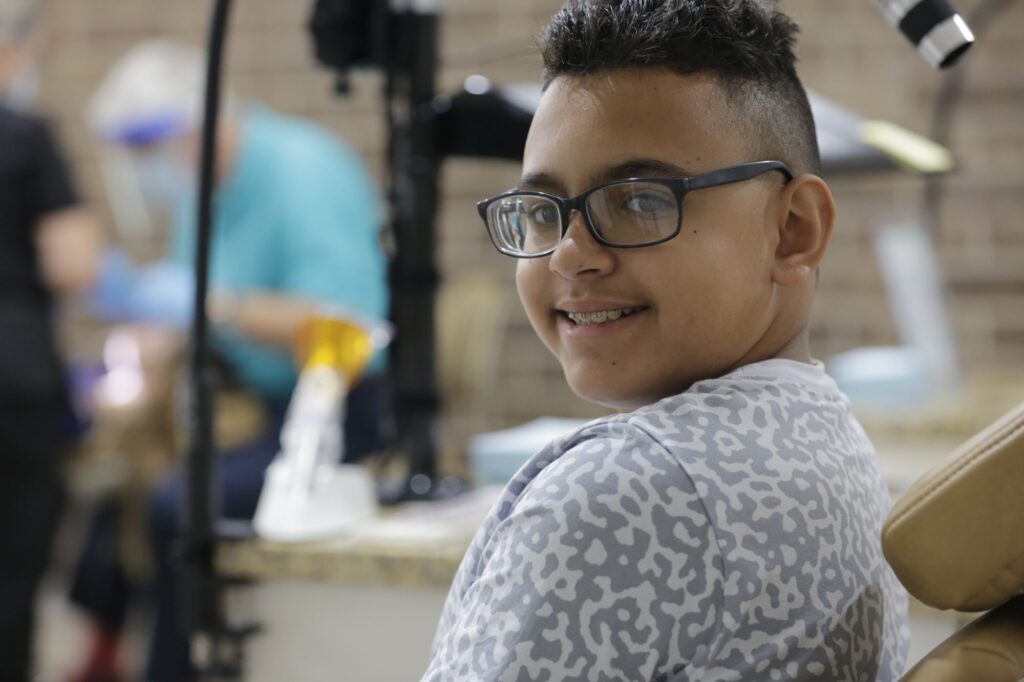
Your child’s first visit with Dr. Norton is friendly, low-key and built around learning. There are no needles, no drills and definitely no goopy, gaggy impressions. Most first visits last about 30 to 60 minutes from check-in to check-out.
Here’s what to expect. Kids get a warm welcome so they can meet the team before anything begins. From there, Dr. Norton performs an initial exam of the teeth, jaw alignment and how the bite comes together. If needed, we may take digital X-rays, photos or scans to see how adult teeth are developing beneath the gums.
Next comes a friendly conversation about habits. We’ll ask about thumb sucking, mouth breathing, tongue posture and any chewing or speech concerns you’ve noticed at home. Then Dr. Norton walks you through what he sees, using clear language instead of clinical jargon, and gives you a straightforward recommendation so you leave knowing exactly where your child stands.
That recommendation will fall into one of three categories:
- No treatment needed right now. Everything is developing nicely.
- Monitor and recheck. We keep an eye on growth and check in periodically as your child gets older.
- Begin Phase 1 treatment. Early intervention can address specific issues while the jaw is still growing.
You’ll leave the visit with answers, not pressure. That’s how Norton Orthodontics has always worked, and it’s how we’ll always work.
Benefits of Early Orthodontic Evaluation
Catching orthodontic concerns early gives Dr. Norton the chance to guide growth rather than correct problems after the fact. For many kids, this means shorter treatment later, better results and fewer complications down the road.
Here are the biggest benefits of an early evaluation:
- Issues get caught before they get worse. Crossbites, severe crowding and jaw misalignment are easier to address while bones are still soft and growing.
- Jaw growth can be guided naturally. When Dr. Norton influences development during growth spurts, treatment often becomes simpler and more predictable.
- Space opens up for permanent teeth. Expanders or space maintainers can prevent crowding before it happens.
- Fewer extractions or jaw corrections later. Early guidance can reduce the need for more invasive care in the teen years.
- Habits that affect development get addressed early. Thumb sucking, tongue thrust and mouth breathing can reshape the jaw over time, so catching these early makes a real difference.
- Future Phase 2 treatment becomes simpler. Kids who have Phase 1 care often need shorter, less complex treatment as teens.
- Kids become more confident patients. Early positive visits help them feel at ease with future care.
Dr. Norton’s approach has always been to recommend only what your child truly needs. Sometimes that means active treatment. Often, it means watching, waiting and letting nature do its work.
Phase 1 vs Phase 2 Orthodontic Treatment
Phase 1 (interceptive) treatment happens between ages 6 and 10, while your child still has a mix of baby and adult teeth. Phase 2 (comprehensive) treatment usually starts around age 11 or later, once all permanent teeth are in. The two phases serve very different purposes, and not every child needs Phase 1.
Here’s a side-by-side look:
| Feature | Phase 1 (Interceptive) | Phase 2 (Comprehensive) |
|---|---|---|
| Typical Age | 6-10 years old | 11+ years old |
| Teeth Present | Mix of baby and adult teeth | All or most permanent teeth |
| Main Goal | Guide jaw growth, correct skeletal issues, create space | Align all permanent teeth, perfect the bite |
| Common Appliances | Expanders, partial braces, space maintainers | Full braces or clear aligners |
| Who Needs It | Kids with crossbites, severe crowding or jaw issues | Most teens pursuing a full smile transformation |
Phase 1 is about prevention and guidance. Phase 2 is about finishing the job and polishing the final result.
Many kids skip Phase 1 entirely and go straight to Phase 2 as teens. Others benefit from both. Dr. Norton will tell you honestly which path makes sense, and he never recommends treatment your child doesn’t need.
Cost of Your Child’s First Orthodontic Visit
Your child’s first orthodontic visit at Norton Orthodontics is completely free. The consult includes the exam, digital imaging if needed and a full conversation about findings and next steps. No fees, no obligation, no pressure.
If treatment is recommended, the cost depends on what your child needs. Many dental insurance plans include orthodontic benefits for children, and Norton Orthodontics offers flexible payments so your child’s care fits comfortably into your family’s budget.
Dr. Norton and his team will walk you through every number so there are no surprises when it’s time to decide.
Signs Your Child May Need to See an Orthodontist Sooner
Age 7 is the general recommendation, but some kids show signs that warrant an earlier look. If you notice any of the following, it’s worth scheduling a free consult.
Losing baby teeth before age 5, or still having many baby teeth after age 7, can signal developmental concerns worth checking. The same goes for difficulty chewing or biting. If meals are frustrating or your child avoids certain foods, bite alignment could be the cause. Chronic mouth breathing is another one to watch, because it can affect jaw development and facial growth over time.
A few more signs to keep on your radar:
- Persistent thumb sucking past age 5. This habit can reshape the roof of the mouth and push teeth out of position.
- Crowded, blocked or misplaced teeth. When adult teeth come in sideways or seem to have no room, early intervention helps.
- Jaws that shift, click or pop. Unusual jaw sounds or movement may point to alignment issues.
- Teeth that don’t meet properly. Open bites, crossbites and underbites are easier to correct during growth.
- Speech difficulties. Lisps or trouble with certain sounds sometimes tie back to tooth or jaw position.
You know your child best. If something feels off, trust that instinct. Dr. Norton would rather see your child early and reassure you than have you wait and worry.
Frequently Asked Questions
Is age 7 too early for braces?
Age 7 is the right age for an evaluation, not necessarily for braces. Most children who visit at age 7 won’t start treatment right away. The visit lets Dr. Norton spot anything that needs early attention and decide whether to monitor, act now or wait until the teen years. Starting with a free consult gives you information without any commitment.
Do I need a referral from a dentist to see an orthodontist?
No referral is needed. You can schedule a free consult at Norton Orthodontics directly, any time. Many families come in on their own after noticing something or simply because their child has turned 7. If your dentist has shared specific concerns, bring those notes along so Dr. Norton can factor them into the evaluation.
What’s the difference between a pediatric dentist and an orthodontist?
A pediatric dentist focuses on your child’s overall oral health, cleanings, cavities and routine care. Dr. Norton specializes in tooth and jaw alignment, bite correction and treatment with braces or aligners. He completed years of additional specialty training beyond dental school, which is why orthodontic care requires a separate visit. The two work together to support your child’s smile.
How do I prepare my child for their first appointment?
Keep it positive and simple. Explain that the visit is a friendly checkup to count teeth, take some pictures and meet the team. There won’t be anything uncomfortable. Bring any X-rays from your dentist if you have them, along with a list of any concerns you’ve noticed. Let your child ask questions too.
Will my child need braces if we start early?
Not necessarily. Many children who have early evaluations end up on a simple monitoring plan and never need Phase 1 treatment. Others benefit greatly from early intervention. The only way to know is through an evaluation, and since the consult is free, there’s no reason to guess.
How often should we return for follow-up visits?
If Dr. Norton recommends monitoring instead of active treatment, your child will come back for periodic checkups as they grow. These visits let us track growth patterns, erupting teeth and bite development. When the right time for braces or aligners arrives, we’ll know exactly when to start treatment for the best possible results.
Schedule Your Child’s Free Consult at Norton Orthodontics
Your child’s best smile starts here. Whether you’re ready to schedule or just have questions, Dr. Norton and his team are here to help families across Southwest Florida feel confident about every step. With three locations, caring for your child’s smile is simple:
- Cape Coral Office | 4115 Del Prado Blvd. S., Cape Coral, FL | (239) 542-6113
- Port Charlotte Office | 3872 Tamiami Trail, Port Charlotte, FL | (941) 313-7617
- Bonita Springs Office | 9510 Bonita Beach Rd., Bonita Springs, FL | (239) 349-2560
Ready to see what Dr. Norton recommends for your child? Book your free consult today and see why families across Southwest Florida trust Norton Orthodontics with their kids’ smiles.